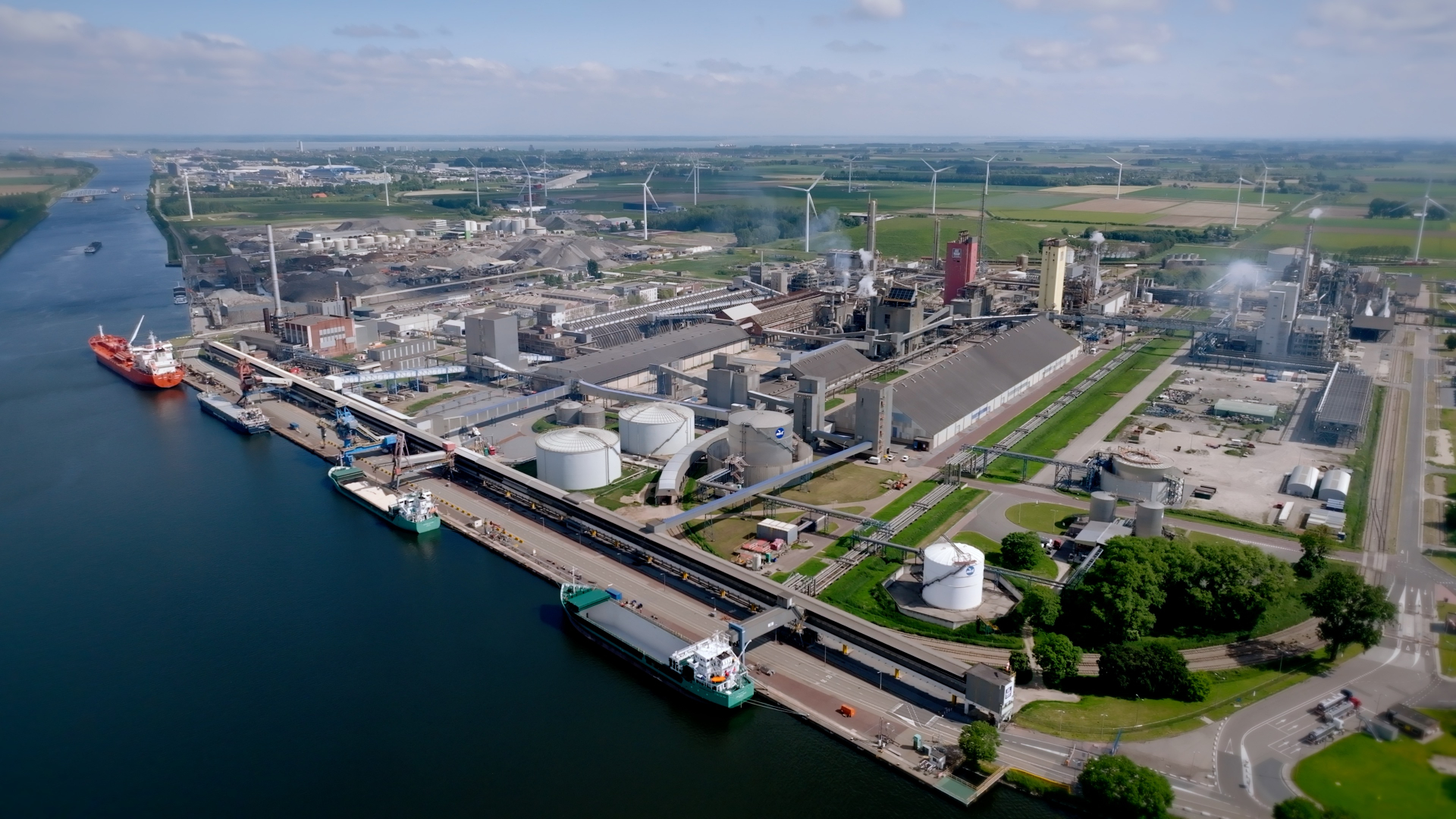
Yara Sluiskil proves to be a crucial link in the European energy and raw materials transition

In the heart of North Sea Port, fertilizer producer Yara Sluiskil is working on an impressive vision for the future: creating a strategic European hub for fertilizer, ammonia, hydrogen, AdBlue, and CO₂ storage. The company is leading the way with one of the largest Carbon Capture & Storage (CCS) projects in the European industry, and the world's first cross-border CCS project.
This year, Yara Sluiskil will become the first in the world to capture CO₂ and store it abroad to contribute to a better climate. This will prevent up to 800,000 tons of CO₂ from being released into the atmosphere annually. Moreover, Yara Sluiskil has already significantly reduced its CO₂ emissions in recent decades. In 1990, CO₂ equivalent emissions from fertilizer production amounted to 5.2 million tons. In 2020 this had fallen to 1.9 million tonnes and is expected to decline further to 1 million tonnes in 2027.
Groundbreaking CCS project
Yara Sluiskil has been a pioneer in carbon capture for decades. More than a million tons of CO₂ are captured annually and reused in various applications. In doing so, Yara also supports sectors such as agriculture, shipping, and energy. With the construction of a new CO₂ liquefaction plant, the largest in the world, this expertise is now being scaled up to industrial CCS on a European scale. In the new system, CO₂ will be captured, liquefied, and transported by special vessel to the Northern Lights project in Norway, where it will be permanently stored in depleted gas fields under the seabed. Construction is almost complete.
Yara Sluiskil is already among the top 10 percent most efficient plants in Europe, and soon its climate footprint will be even smaller. This project is a cornerstone of Yara's climate roadmap and a powerful example of how industrial infrastructure, technological expertise, and cross-border collaboration can contribute to a more sustainable future.
Strategic hub for Europe
Yara Sluiskil, Europe's largest producer of ammonia, fertilizer, and AdBlue, is of increasing strategic importance. At a time when geopolitical tensions and resource scarcity emphasize the need for strategic autonomy, Yara is investing heavily in future-proof production technologies. This positions Yara Sluiskil as a crucial link in Europe's energy and resource transition.
See also our previous articles on Yara's CCS project:
https://www.smartdeltaresources.com/en/first-pile-ccs-project-yara-sluiskil-driven